Blog Post
Creating Compelling Content for Higher Education: Tips and Best Practices

Creating Compelling Content for Higher Education: Tips and Best Practices
Creating Compelling Content for Higher Education: Tips and Best Practices
In the digital era, higher education institutions face intense competition both locally and globally. Producing content that connects meaningfully with prospective students, parents, and stakeholders is crucial. The focus goes beyond visibility—it’s about communicating value and demonstrating measurable outcomes. This guide presents strategies, best practices, and insights for higher education leaders to create engaging content.
Improving Online Visibility with SEO and Generative Search Engines
Organic search is the largest driver of website traffic for higher education. Data from 200+ higher-ed sites shows:
- 46% of total users come via organic search
- 61% of organic sessions are engaged sessions
Non-branded keywords dominate search behavior: 87% of all organic impressions (Higher Ed SEO Benchmarks 2024). Prospective students primarily search for programs and opportunities rather than institution names.
Generative AI and Search:
AI-powered engines like Google Gemini, ChatGPT, and Google’s Search Generative Experience (SGE) are transforming discovery. AI Overviews summarize content at the top of search results, which may reduce traditional CTR—but also provide new opportunities to optimize content for generative search.

Best Practices for Generative Search Optimization:
Structural Integrity:
- Use schema markup for AI to understand content context
- Organize pages with clear subheadings reflecting student questions
- Design site architecture for easy crawling and parsing
Conversational & Comprehensive Content:
- Write in conversational, student-focused language
- Use brief, scannable paragraphs
- Address both common and advanced questions
Local & Multimedia Optimization:
- Use descriptive alt text and relevant file names
- Optimize file sizes for fast loading
Developing Engaging Content That Resonates
Institutions must now show tangible outcomes rather than relying solely on reputation. Strategies should focus on ROI, alumni success, and transparent program benefits.
Effective Strategies:
- Alumni Narratives: Share video interviews or Q&As highlighting career paths, skills gained, and achievements
- Thought Leadership: Establish content hubs like blogs or digital journals featuring expert insights (e.g., MIT Technology Review)
- Video & Interactivity: Use short-form videos (YouTube, Instagram Reels, podcasts) to engage digital-native students
Tracking outcomes is essential. Metrics such as wages, transfers, and graduation rates help demonstrate program impact, emphasizing the need for strong data governance and infrastructure.
Using AI for Content Creation
Generative AI can increase efficiency but must be implemented responsibly. Benefits include:
- Automating routine content tasks (drafting outlines, ad copy, terminology suggestions)
- Freeing staff to focus on strategic, high-impact activities
Governance & Ethical Best Practices:
- Transparency: Disclose AI contributions in official content
- Delineating Roles: Humans retain final judgment; AI assists with ideation, editing, and structural refinement
- IP & Legal Risk: Establish clear policies for AI-generated content ownership and use
Student-Generated Content (SGC)
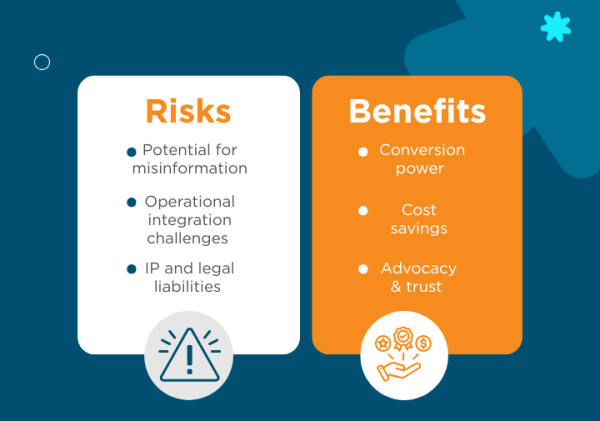
Authentic student voices build trust and provide social proof that branded messaging cannot replicate. It serves as an effective, cost-efficient strategy that harnesses student creativity. This approach enables institutions to enhance recruitment while reducing acquisition costs.

Benefits vs. Risks:
Best Practices for Implementing SGC:
- Select the Right Students: Choose ambassadors aligned with institutional values
- Provide Guidelines, Not Scripts: Allow authentic expression while keeping content on message
- Feature Diverse Voices: Highlight different programs, backgrounds, and experiences
Conclusion
|
Higher education content creation is evolving rapidly. To boost engagement and visibility, institutions should: 1. Incorporate SEO and optimize for generative AI search 2. Adopt innovative technologies such as AI to streamline content creation 3. Involve students authentically in content generation Ongoing adaptation and learning from best practices will help institutions stay at the forefront of educational excellence. If you're looking for guidance, support, or solutions tailored to your institution’s needs, EDUTECHLoft is here to help. Book a meeting with us today, and let’s explore how we can advance your goals. |